
Nineteenth-century population growth, westward expansion, and city development depended on full stomachs, courtesy of meatpackers and farm produce. And none of that would have happened without thousands of miles of new railroad tracks and the wood crossties that supported them.
More Land and More Trade, Brought to You by Treated Crossties
The United States more than doubled in size in the first half of the 19th century. With the Louisiana Purchase in 1803 and lands won in the Mexican-American War in 1845 (and subsequently in 1850 with the Gadsden Purchase), the country added 886 million acres of new countryside, expanding from 553 million acres to 1,439 million acres. Settlers moved west to pursue the opportunity to own and work the land, establishing farms and ranches south into Texas and north across the Great Plains.
Innovations in wood preservation and steam locomotive technology—as well as significant immigrant labor and federal subsidies—encouraged rail companies to extend west and serve new lands. TheBethell Pressure Treatment method, invented in 1838, injected wood preservative deep into wood cells and strengthened wooden rail ties so well that they did not rot, bend, or break even under pressure from heavy rail cars. In the subsequent decades, railroad magnates learned that creosote-treated railroad ties maintained their integrity well beyond the average life expectancy at the time, even in extreme environmental conditions. While people lived on average around 40 years, creosote-treated crossties could last upwards of 70 years.1
Railroad magnates learned that creosote-treated railroad ties maintained their integrity well beyond the average life expectancy at the time, even in extreme environmental conditions. While people lived on average around 40 years, creosote-treated crossties could last upwards of 70 years.
The West was a source of inspiration for Americans. As the country exited the turmoil of the American Civil War—during which many rail charters had been postponed—industrial growth took off across the country’s new territories. New rail lines cropped up across the new western lands, connecting Americans to what felt like infinite economic possibilities; the Atchison, Topeka and Santa Fe Railroad was laid in 1868, the Kansas Pacific Railroad was laid in 1863, and the Chicago & Northwestern Railroad consolidated short lines to extend across the Great Plains in 1865.
These lines supplied growing cities such as Minneapolis, St. Louis, Denver, Kansas City, and Omaha with new settlers and manufactured goods, and the East Coast with raw materials and agricultural products. Demand for creosote-treated crossties led to the creation of dedicated creosote pressure-treatment facilities, which cropped up across the country in the 1870s—and the railroad development and economic growth just continued.
Goodbye Cowboy: Creosote-Treated Railroads Carry Livestock Across the Country
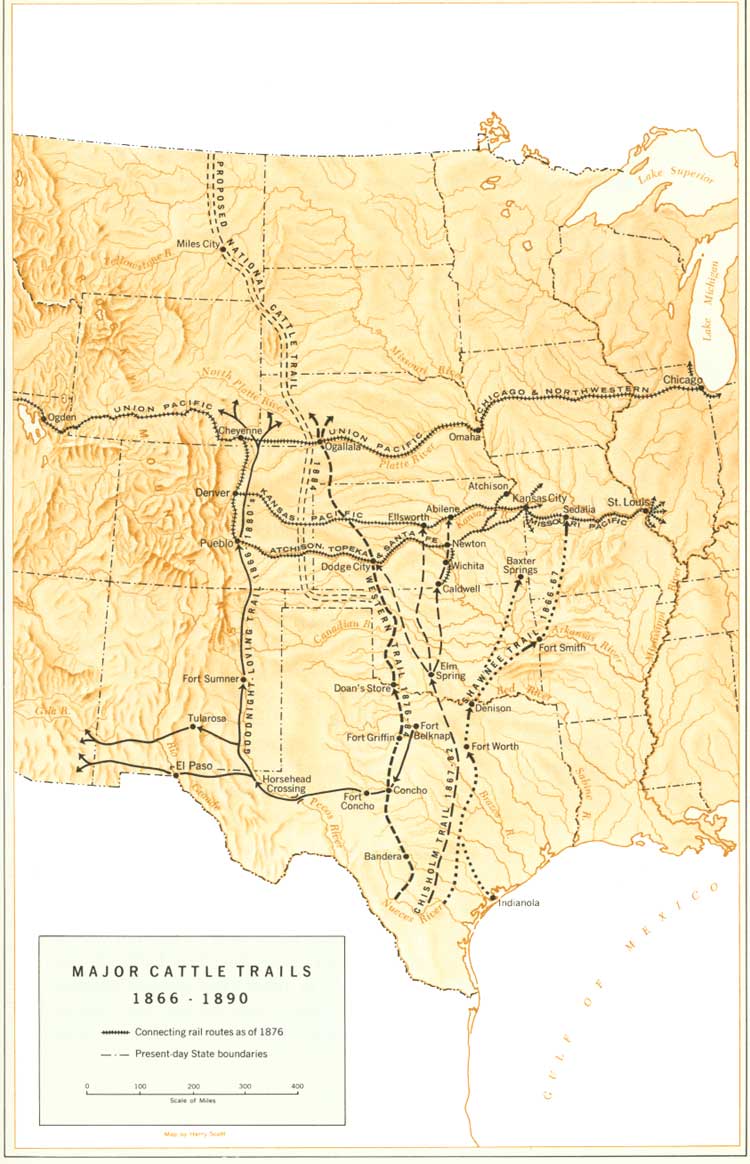
With major cities developing in the Midwest along new railroad lines, ranchers and farmers in points both west and south saw opportunities to grow their businesses by “driving” their cattle, pig, and other livestock to these new urban centers. Stockyards were built where these livestock could be sold and then shipped via rail to the country’s oldest and largest cities on the East Coast, such as New York and Philadelphia.
The quiet but mighty crosstie had helped grow whole new cities and industries, transforming American life.
East-west livestock shipment became even easier when the first transcontinental railroad was completed in 1869, connecting Union Pacific’s line from Sacramento, CA, to the existing Northwestern railroad (which served Chicago, IL) at Promontory Summit, UT. Trails continued to be used for cattle drives from Texas until rail connected the state to Midwestern stockyards in the 1870s, spelling the beginning of the end for the iconic Texan cowboy. Instead of driving cattle a thousand miles north, stockyards were built closer to home, such as the famous Fort Worth Stockyard in 1887, where ranchers gathered their livestock to be shipped via rail to northern and eastern markets.
Chicago Stockyards Corner the Meat Market
A 200-person settlement in 1833, Chicago was a small trading post on the Chicago River, which connected the Great Lakes to the Mississippi River system at the start of the steamboat era. As creosote treatment, locomotive technology, and enthusiasm for settling The West skyrocketed throughout the 19th century, Chicago became a natural hub for rail connectivity. Railroads going west first served nearby mines, but then extended into new midwestern cities with crops and livestock to sell.
Its geographic location between the developed east and the developing west made Chicago a destination for cattle ranchers to the south and west. First by trail, and then by rail, cowboys sent their livestock to Chicago’s stockyards to be sold. When it was connected to the East Coast via the Michigan Central Railroad in 1851, Chicago was the first midwestern city to be connected to both western settlements and established eastern cities like New York.
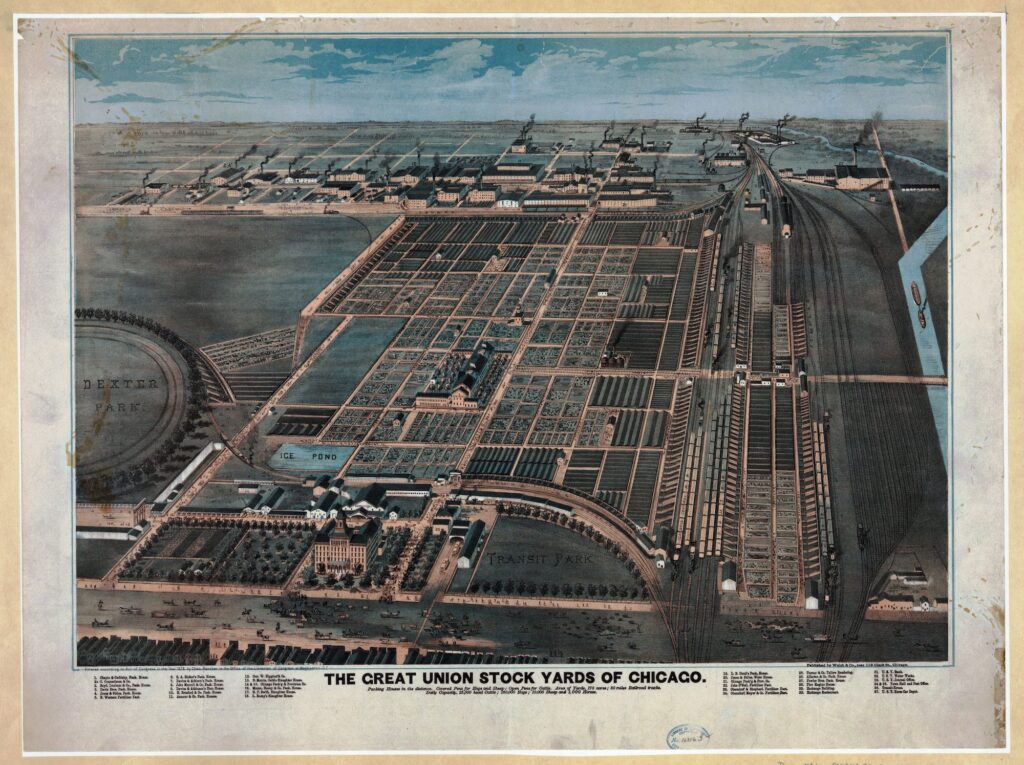
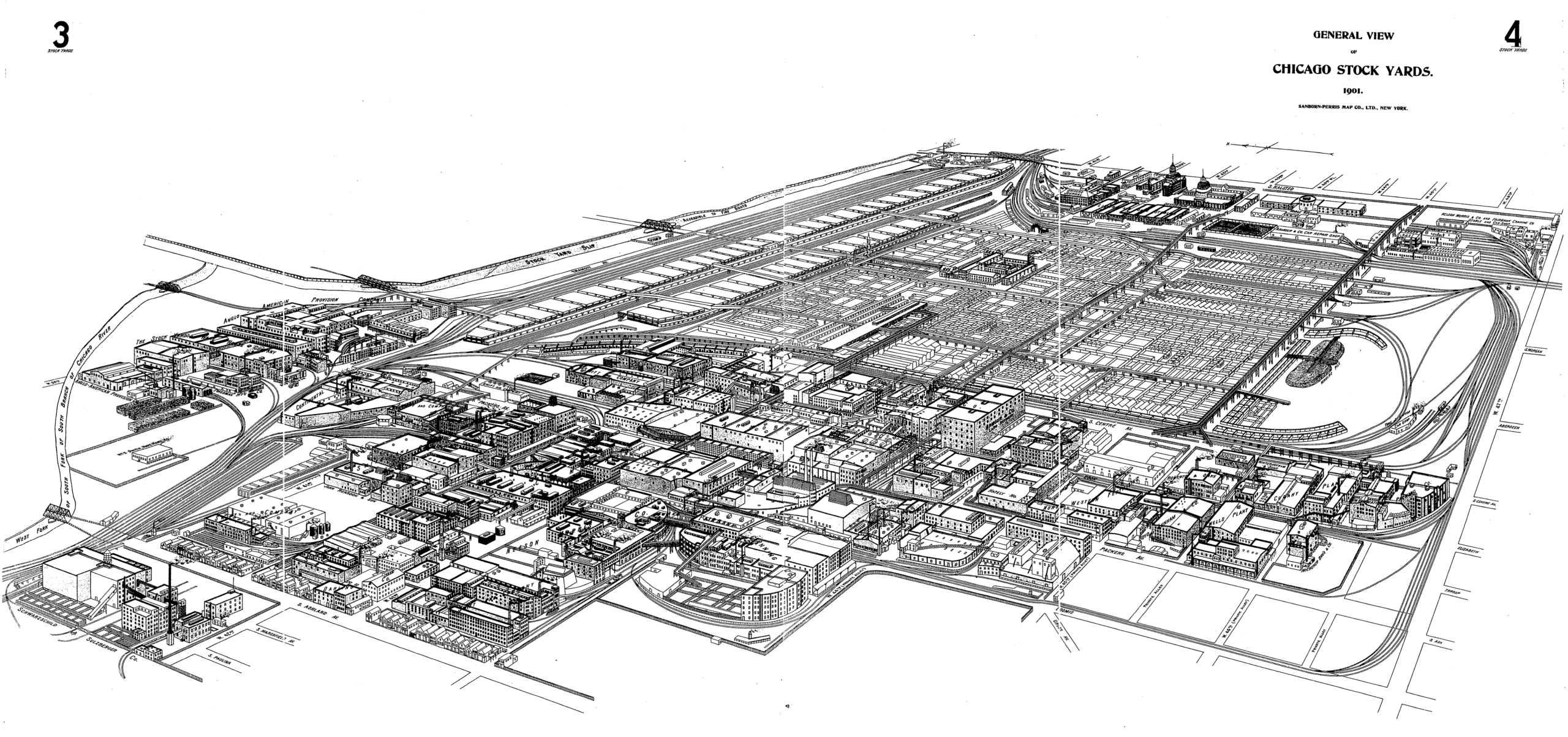
The largest stockyard in the nation, Union Stock Yards, was built in 1865 to support this growing industry. Its name reflected that it united nineteen different rail depots across a 375-acre site.
The largest stockyard in the nation, Union Stock Yards, was built in 1865 to support this growing industry. Its name reflected that it united nineteen different rail depots across a 375-acre site. Its pens could hold 75 thousand hogs, 21 thousand cattle and 22 thousand sheep, and all around “The Yards” cropped up hotels, saloons, restaurants, and offices for merchants.
Dead or Alive? Refrigeration Transforms Stockyards into Meatpacking
Refrigerated rail cars, using ice harvested from lakes in the winter months, were invented in the 1870s, with mechanical refrigeration following in short order in the 1880s. With refrigeration possible, merchants realized it was cheaper and more efficient to butcher cattle at the stockyards and ship the meat via rail, rather than ship livestock.
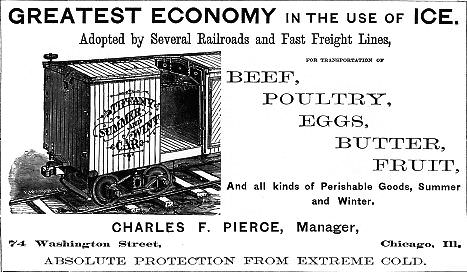
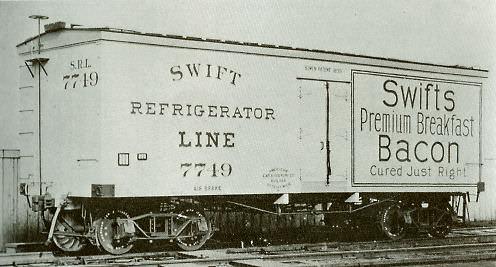
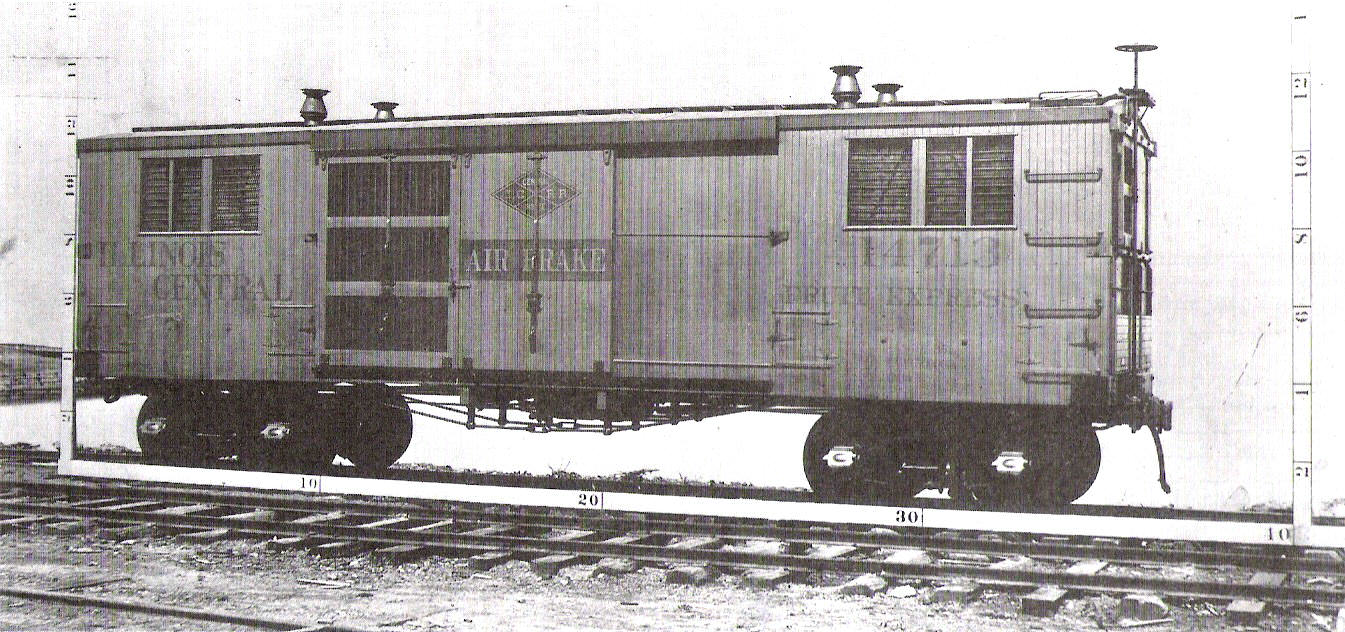
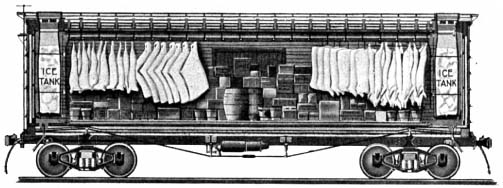
Under Timothy Blackstone’s leadership, Union Stock Yards cornered the livestock industry in the late 1800s, and in the process invented the meatpacking industry. By 1890, the railroad companies no longer had the upper hand in setting prices; instead, merchants built refrigerated rail cars which railroads were compelled to haul at lower prices than they had cars with livestock. Union Stock Yards processed 2 million animals a year in 1870, growing to 9 million by 1890. The Yards switched from being the largest stockyard in the country to processing the most packaged meat in the country. Although its conditions would be criticized in Upton Sinclair’s novel The Jungle—and regulated by Teddy Roosevelt in short order—by the turn of the 20th century, Chicago’s Union Stock Yards produced 82 percent of the country’s meat.
By the time crosstie wood preservation was engrained in the nation’s railway networks, people had begun to take “westward” rail transportation for granted, as reflected in Babe Ruth’s autobiography reminiscences about the Yankees’ “western” baseball trips to cities like Chicago and St. Louis. The quiet but mighty crosstie had helped grow whole new cities and industries, transforming American life.
This article originally appeared in the Q2 2026 issue of the Railway Tie Association’s Crossties Magazine.
Notes
1. University of Oregon, Mapping History. Life Expectancy Graphs 1850-2000.